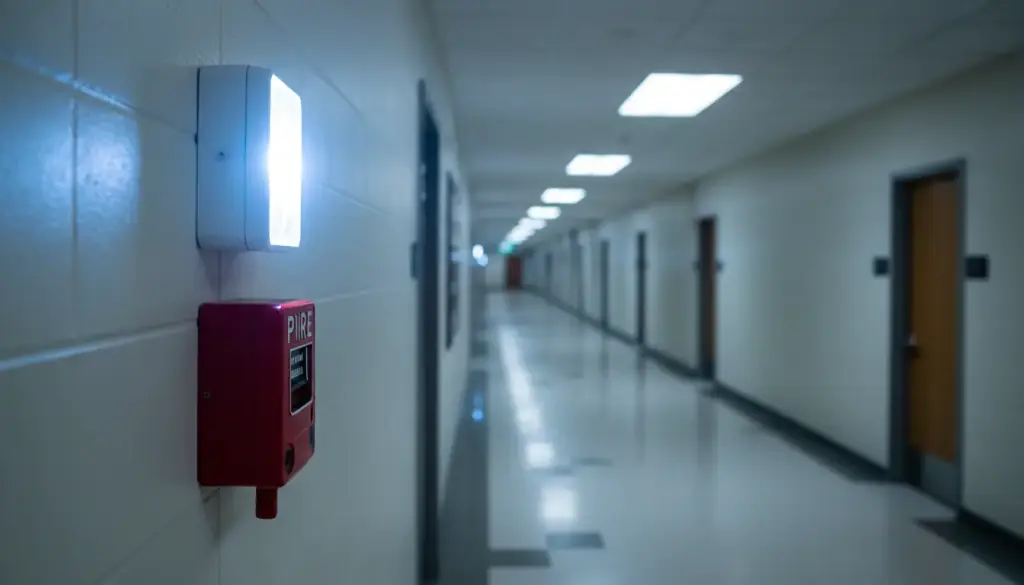
What a fire alarm is up against after the doors lock
A fire alarm earns its keep on the worst night of the year, usually when the building is empty or everyone in it is asleep. At that hour the system has to notice trouble on its own, sound loudly enough to wake people, and get word to someone who can send help. Every link in that chain can fail quietly. A detector gets painted over during a remodel, a battery runs down in a back room, or a phone line is cut by a storm or a contractor's trencher, and nobody finds out until the night it matters.
That is why Certified Alarm treats a fire system as a chain rather than a box on the wall. Detection, notification and monitoring each get looked at separately, because a panel that works perfectly but cannot reach anyone is only half an answer. We have worked out of Sheffield since 1960, and those are the usual ways a fire system lets a building down.
How Certified designs, installs and inspects a system
It starts with consulting. Larger jobs get a free in-person consultation at the building, and a video consultation by Zoom, FaceTime or Google Meet works when that is easier. We look at how the space is used, where people sleep or gather, and what the building already has in place, then draw up a custom design rather than dropping in a stock package.
Installation is done by our crew on UL-listed systems and equipment. Our fire alarm team is NICET-certified, and we are certified installation experts for Bosch and First Alert, so panels, detectors and notification devices go in the way those manufacturers intend. We hold Alabama licence ABES-066 and Tennessee licence C0556, and we install for homes, businesses, industrial sites and medical facilities across the Shoals and beyond.
Inspections belong to the same job, not an afterthought. A comprehensive inspection walks every device, confirms the panel reports what it should, and gives you a clear picture of the system's condition, so the next visit starts from something known instead of a guess.
After install: monitoring, service and the signs of trouble
A fire system is only as good as the watching behind it. Certified provides UL-listed central station alarm monitoring, with signals traveling over NetCom internet monitoring, a cellular backup and Halo wireless communications, so a dead phone line does not leave the building on its own. Emergency service runs 24 hours a day, 7 days a week.
Service and maintenance keep the system honest between inspections. Know the signs that it needs attention: a trouble light or panel message that does not clear, a detector chirping for a battery, a device that looks discolored, damaged or painted over, or false alarms that keep coming from the same spot. None of those should wait for the next scheduled visit.
If any of that sounds familiar, the Sheffield office answers at (256) 406-2039, with an alternate line at (256) 383-1225. We serve Alabama, Tennessee and Mississippi, from Florence, Decatur and Huntsville to Lawrenceburg and Corinth.