Access Control or Keys: What Works Better for a Small Office
Keys are cheap to start with and costly to manage, and access control flips that trade for many small offices.
October 13, 2026 · 4 min read
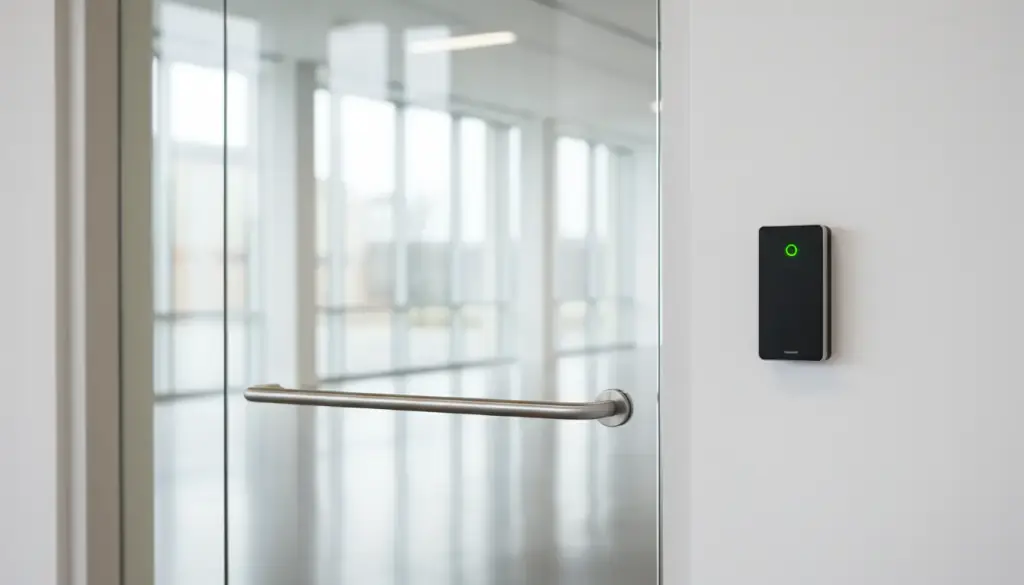
Most small offices start with metal keys, and for a while that works fine. Then the staff grows, someone leaves, a contractor needs a weekend visit, and nobody can say for sure how many copies of the front door key exist. At that point it is worth looking at what an access control system does differently.
The trouble with keys
A key does one thing: it opens a lock. It does not tell you who used it, when they used it, or whether the person holding it should still have it. It can be copied at a hardware store. It can be lost without anyone noticing. And when an employee leaves, the only way to be sure they can no longer get in is to change the lock and hand out new keys to everyone else.
For a church or an office with volunteers, part-timers and cleaning crews, that adds up to a lot of keys and a lot of trust. Most of the time the trust is deserved. The issue is that when something goes wrong, you have no record to look at.
What access control changes
An access control system replaces the key with a credential. At Certified Alarm, we install systems that use card access or facial recognition readers at the door. A person presents a card or their face, the system checks whether they are allowed through that door at that time, and the lock responds. You decide who goes where, and the system enforces it.
That gives you several things a key cannot.
- Areas: allow or deny each person access to specific doors, so the front office is open to everyone while the records room or supply closet is not.
- Time profiles: give a part-timer access only during their shifts, or let the cleaning crew in on certain evenings and no others.
- Event logs: the system keeps an archived record of who used which door and when, which you can look back at when you need to.
- Automatic door schedules: doors can open for business hours and lock again after, without anyone having to remember.
Removing a former employee
This is where the difference shows up most. With keys, removing someone means collecting every key they have, and hoping they did not make a copy. If you are not sure, you re-key the locks and redistribute keys to everyone. With access control, you delete that person's profile and their credential stops working. That can be done quickly from the system, at the moment the decision is made, and it does not affect anyone else.
The same goes for adding someone. A new hire, a temporary worker or a volunteer coordinator can be set up with exactly the access they need and nothing more. When their role changes, their profile changes with it.
Choosing a reader, and when keys still make sense
Cards are familiar, simple and work well for most offices. A lost card can be turned off without touching anything else. Facial recognition readers suit places where you do not want credentials to be passed around or lost, because the credential is the person. Which one fits depends on your building, your staff and how you work, and some sites use a mix.
Think about a few practical points as you decide. Which doors really need control, and which can stay as they are? Who needs access outside normal hours? What should happen during a power outage, and how does the system keep people able to exit safely? Those are design questions, and they are worth working through with someone who installs these systems for a living.
Keys still make sense in some places. Access control is not right for every door. A small office with two employees and one entrance may do fine with good locks and careful key habits. The case for access control gets stronger as the headcount, the number of doors and the turnover grow, or when you need to know who was in the building. It also helps if you manage a shared space where different groups need different access.
Getting it set up properly
Certified Alarm handles access control from start to finish: consultation, design, installation, monitoring and maintenance. That matters because an access system that is installed and then left alone tends to drift out of date. Profiles pile up, schedules stop matching reality, and the log goes unchecked. Regular maintenance keeps it useful.
If you are weighing keys against access control for your office, church or shop, Certified Alarm in Sheffield offers a free consultation, in person or by video on Zoom, FaceTime or Google Meet. We can look at your doors and tell you honestly what makes sense. Call us at (256) 406-2039.
Certified Alarm Company of Alabama Inc, (256) 406-2039
Call (256) 406-2039More articles
What Alarm Monitoring Actually Does After a Sensor Trips
Between a tripped sensor and a person showing up, there is a chain of steps, and each link in that chain is worth understanding.
What a Fire Alarm Inspection Covers, and How to Prepare for One
An inspection is easier, faster and less disruptive when you know what the inspector is looking at before they arrive.