Choosing a Personal Emergency Button for a Parent Living Alone
The best device is the one your parent will actually wear, so the conversation matters as much as the equipment.
October 13, 2026 · 4 min read
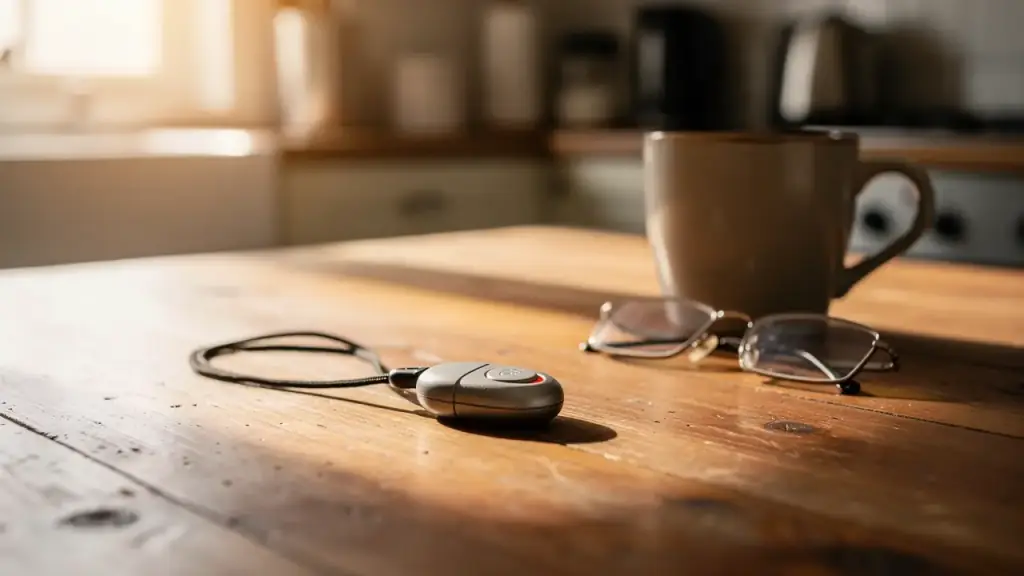
If your mother or father lives alone, you probably think about the phone call you do not want to get. A personal emergency device is one practical answer. It is a small button, worn or carried, that lets your parent call for help with a single press, even when they cannot get to a phone. The hard part is rarely the technology. It is getting the right device, setting it up well, and making sure it becomes part of daily life.
Start with the conversation, not the catalog
Many older adults hear the word emergency button and picture a loss of independence. Before you shop, talk about it as a way to stay in their own home longer, not a sign that you are worried about them. Ask what situations concern them. Some people worry about falling in the bathroom. Others worry about a medical event at night, or about being unable to reach the phone across the room.
Let your parent be part of the decision. A device chosen for them and handed over often ends up in a drawer. A device they helped choose, and understand, ends up on their wrist or around their neck.
What to ask before you choose
Personal emergency devices come in different forms and work in different ways, so the right questions will save you from a poor fit. Certified Alarm provides personal emergency devices for the elderly, for people who live alone, and for people with medical conditions, and these are the questions we would want you to ask any provider, including us.
- How will your parent wear or carry it, and will it be comfortable enough to keep on all day?
- Will it work in the whole house, including the bathroom, the bedroom and the yard?
- Is it easy to press, even with stiff hands or poor eyesight?
- Who answers when the button is pressed, and how fast does help get started?
- Who gets called besides emergency services, such as a neighbor or a family member?
- How do you know the battery is still good?
Pay particular attention to the bathroom. Falls can happen in places where people are not carrying a phone, and a device that cannot be worn in the shower or kept within reach there will miss some of the moments it is meant for.
Setting it up so it works
Once you have a device, the setup decides whether it helps. Make sure the monitoring information is accurate: the correct address, a short list of medical conditions and medications you are comfortable sharing, and a call list of people who can actually answer their phones. A device that connects to a monitoring center with the wrong information is a device with a handicap.
Then practice. Press the button together, with the monitoring center expecting it, and let your parent hear how the call works. Many people are startled the first time a voice answers, and they do better if that first time is a test rather than an emergency. Repeat it now and then, so the routine stays familiar and you can confirm the device is still working.
Living with it day to day
A device only helps when it is on. Build it into the morning routine, the way glasses or a watch would be. Some families choose a spot where the device lives overnight, so it is always in the same place when it is time to put it on.
Agree ahead of time on what counts as a reason to press. Parents who do not want to bother anyone sometimes hesitate when they most need to press. Tell them clearly that a fall, a sudden dizzy spell, chest discomfort or a feeling that something is wrong are all good reasons, and that no one will think of it as a bother. A false alarm is far better than a hesitation.
Check in on the equipment, not just on your parent. A dead battery or a device left on the nightstand does no good. A short monthly reminder to test it takes a minute and keeps the habit alive.
A device is one piece of the picture
An emergency button does not replace regular visits, phone calls and neighbors who keep an eye out. It is a safety net under all of those. The goal is that if something does go wrong when no one else is in the room, help is a button press away.
If you would like to talk through what would suit your parent, Certified Alarm in Sheffield offers a free consultation, in person or by video on Zoom, FaceTime or Google Meet. You are welcome to bring your parent along, or join by video from wherever you are. Call us at (256) 406-2039.
Certified Alarm Company of Alabama Inc, (256) 406-2039
Call (256) 406-2039More articles
What Alarm Monitoring Actually Does After a Sensor Trips
Between a tripped sensor and a person showing up, there is a chain of steps, and each link in that chain is worth understanding.
What a Fire Alarm Inspection Covers, and How to Prepare for One
An inspection is easier, faster and less disruptive when you know what the inspector is looking at before they arrive.